An independent look at ELRESINO® Academy in Antequera, Málaga, and its hands-on Venetian plaster, stucco, polished plaster and microcement training courses for beginners, tradespeople and professionals.
Inside ELRESINO® Academy: Venetian Plaster and Stucco
Training Courses in Spain
Across Spain, the UK and wider Europe, decorative finishes
are becoming increasingly visible in high-end interiors. From luxury villas and
boutique hotels to modern restaurants, salons, bathrooms and feature walls,
clients are moving away from plain painted surfaces and looking for something
with more depth, texture and personality.
This is where finishes such as Venetian plaster, decorative
stucco, polished plaster and microcement have found their place.
One training provider that stands out within this specialist
area is ELRESINO® Academy, based in Antequera, Málaga, Andalucía,
Spain. From the outside, the academy appears to offer something more
practical and commercially focused than a simple short course. It is not just
about watching a demonstration. It is about learning how these finishes are
prepared, applied, refined and presented as professional decorative surfaces.
For anyone interested in developing a specialist trade
skill, ELRESINO® Academy offers an interesting route into one of the most
in-demand areas of modern interior finishing.
A Growing Demand for Decorative Finishing Skills
The demand for decorative finishes has grown significantly
in recent years. Homeowners, designers, developers and commercial clients are
increasingly looking for interiors that feel unique, natural and crafted.
Standard paint and tiles still have their place, but many
premium projects now want something more distinctive. Venetian plaster can
create a soft, polished and elegant wall finish. Decorative stucco can bring
texture and depth. Microcement can create seamless floors, bathroom walls and
contemporary surfaces without visible grout lines.
These are not basic finishes. They require preparation,
technique, timing and a proper understanding of the material.
That is why training matters.
From an outsider’s perspective, ELRESINO® Academy seems to
recognise that students do not just need to know what a finish looks like. They
need to understand how to achieve it, how to avoid common mistakes and how to
build the confidence to use these techniques in real projects.
What Makes ELRESINO® Academy Interesting?
The most interesting thing about ELRESINO® Academy is that
it appears to sit between two worlds: professional decorative finishing and
practical trade education.
ELRESINO® is not only positioned as a training academy. It
is also connected to real decorative finishing work across residential,
commercial and design-led interiors. That matters, because students are not
learning from theory alone. They are learning from a company that understands
what clients actually ask for, what can go wrong on site and what a premium
finish needs to look like when completed.
The academy focuses on skills such as:
- Venetian
plaster
- Decorative
stucco
- Polished
plaster
- Microcement
- Surface
preparation
- Trowel
control
- Layering
techniques
- Finishing
and polishing
- Sealing
and protection
- Understanding
premium decorative surfaces
For beginners, this provides an introduction to a specialist
area of the trade. For existing painters, plasterers, builders, decorators and
microcement applicators, it creates an opportunity to add higher-value services
to an existing business.
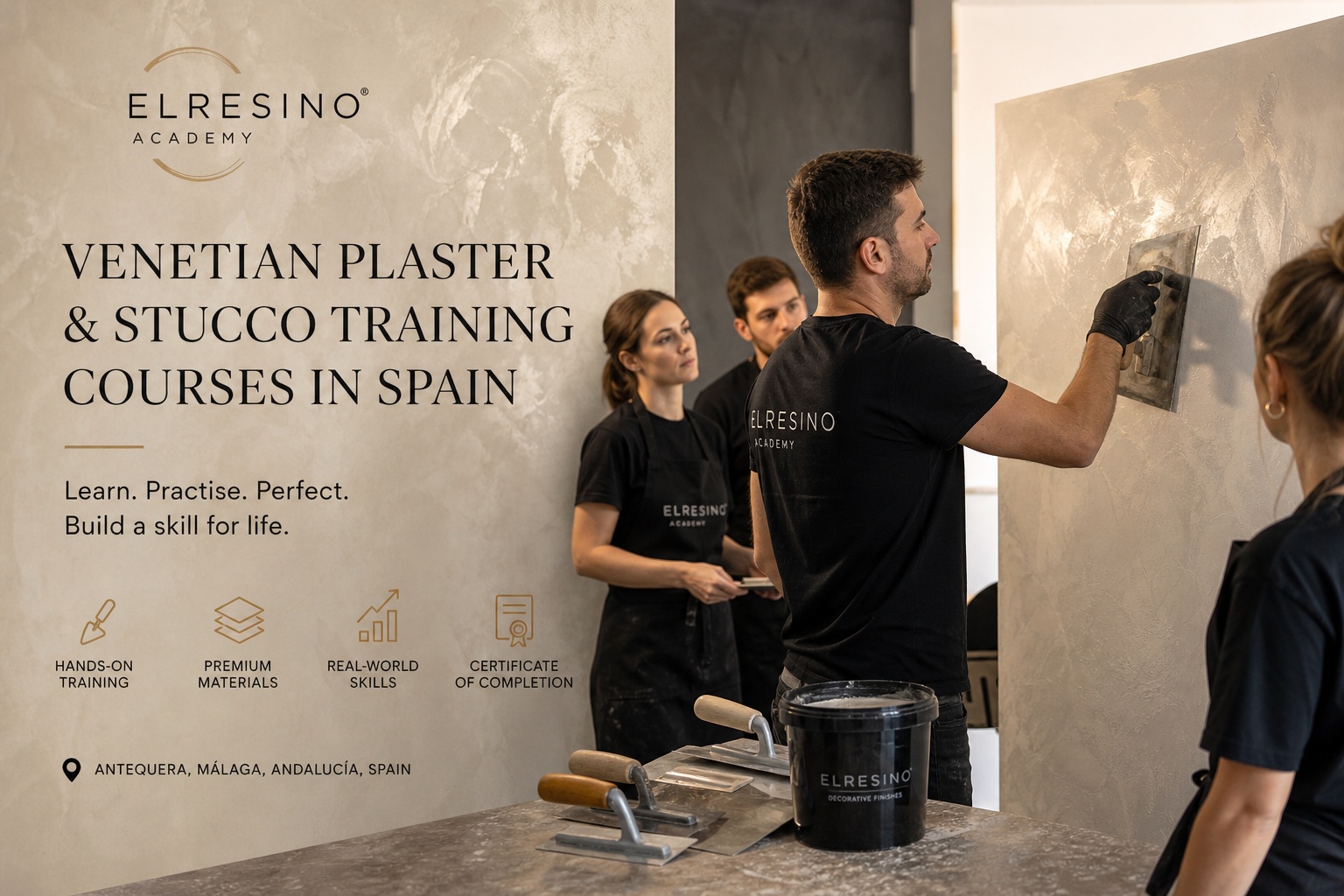
Learning by Doing, Not Just Watching
One of the strongest points about academy is the
practical nature of the training.
Decorative finishes cannot be properly learned through
theory alone. The movement of the trowel, the pressure applied, the way each
layer is built, the drying times and the final polishing all affect the result.
This is why hands-on training is so important.
From the outside, ELRESINO® Academy appears to place strong
emphasis on practical application. Students are expected to work directly with
the materials, practise techniques and develop their confidence through
repetition.
That is especially valuable for finishes such as Venetian
plaster and stucco, where small changes in technique can completely change the
final appearance.
Why Antequera, Málaga Is a Strong Location for Training
The academy’s location in Antequera, Málaga, also
gives it a strong advantage.
Andalucía has a natural connection with traditional
textures, Mediterranean architecture, warm interiors and hand-applied finishes.
At the same time, nearby areas such as Málaga, Marbella, the Costa del Sol,
Granada, Sevilla and Córdoba have strong demand for luxury residential and
commercial interior work.
For students travelling from the UK or other parts of
Europe, the location is also attractive. It offers the chance to train in Spain
while being close to one of Europe’s most active regions for villa renovations,
hospitality interiors, boutique developments and design-led properties.
This makes ELRESINO® Academy more than just a classroom. It
places students close to the type of market where these skills are being used.
Who Might Benefit from These Courses?
ELRESINO® Academy’s Venetian plaster and stucco courses seem
particularly suitable for people who want to gain a practical, specialist skill
with commercial potential.
This may include:
- Beginners
looking for a new career path
- Painters
and decorators
- Plasterers
- Builders
and renovation professionals
- Microcement
applicators
- Interior
designers
- Property
renovation businesses
- Developers
and project managers
- People
wanting to start a decorative finishes business
- Existing
tradespeople looking to offer premium finishes
For a beginner, the course can provide a structured
introduction into decorative finishes. For an experienced tradesperson, it can
help reposition their services towards higher-value interior work.
This is important because decorative finishes are often seen
as premium services. Clients do not usually choose Venetian plaster or
microcement simply because they want the cheapest option. They choose them
because they want impact, design quality and a finish that feels different.
The Value of Venetian Plaster and Stucco Skills
Venetian plaster and stucco have a long history, but they
are now being used in very modern ways.
They can be found in:
- Luxury
feature walls
- Hotel
receptions
- Boutique
restaurants
- Spa-style
bathrooms
- Salons
and wellness spaces
- Modern
villas
- Retail
interiors
- High-end
residential projects
- Commercial
reception areas
- Interior
design showpieces
The appeal is easy to understand. These finishes bring
depth, softness and character to a surface. They can be subtle and natural, or
bold and dramatic depending on the colour, technique and finish.
For anyone working in the interiors, renovations or
construction sector, being able to offer this type of finish can be a real
point of difference.
Microcement as Part of the Training Conversation
Although the focus is often on Venetian plaster and stucco,
microcement is also an important part of the decorative finishes market.
Microcement is widely used for seamless bathrooms, floors,
walls, stairs, kitchens and modern interiors. Its popularity has grown because
it offers a clean, continuous look without the interruption of grout lines.
For students, understanding microcement alongside Venetian
plaster and stucco can be commercially useful. It allows them to offer a wider
range of decorative solutions and advise clients more confidently.
A client may want Venetian plaster for a feature wall,
microcement for a bathroom and a polished plaster finish for a reception area.
Understanding how these materials differ and where each one works best is an
important part of becoming a more complete decorative finishes applicator.
A Course That Seems Built Around Real Opportunity
What makes ELRESINO® Academy particularly appealing is that
the courses appear to be built around real-world opportunity, not just
technique.
Learning how to apply a finish is one part of the journey.
Understanding how to present that finish to clients is another.
Decorative finishes are visual, tactile and premium.
Students need to know how to create samples, explain options, build confidence
with clients and price their work properly.
From an outside perspective, ELRESINO® Academy seems to
understand that students may be attending for different reasons. Some may
simply want to learn a new skill. Others may want to add a premium service to
an existing trade. Some may want to build a business around decorative
finishes.
This wider commercial awareness makes the training feel more
relevant.
Certificate of Completion and Professional Confidence
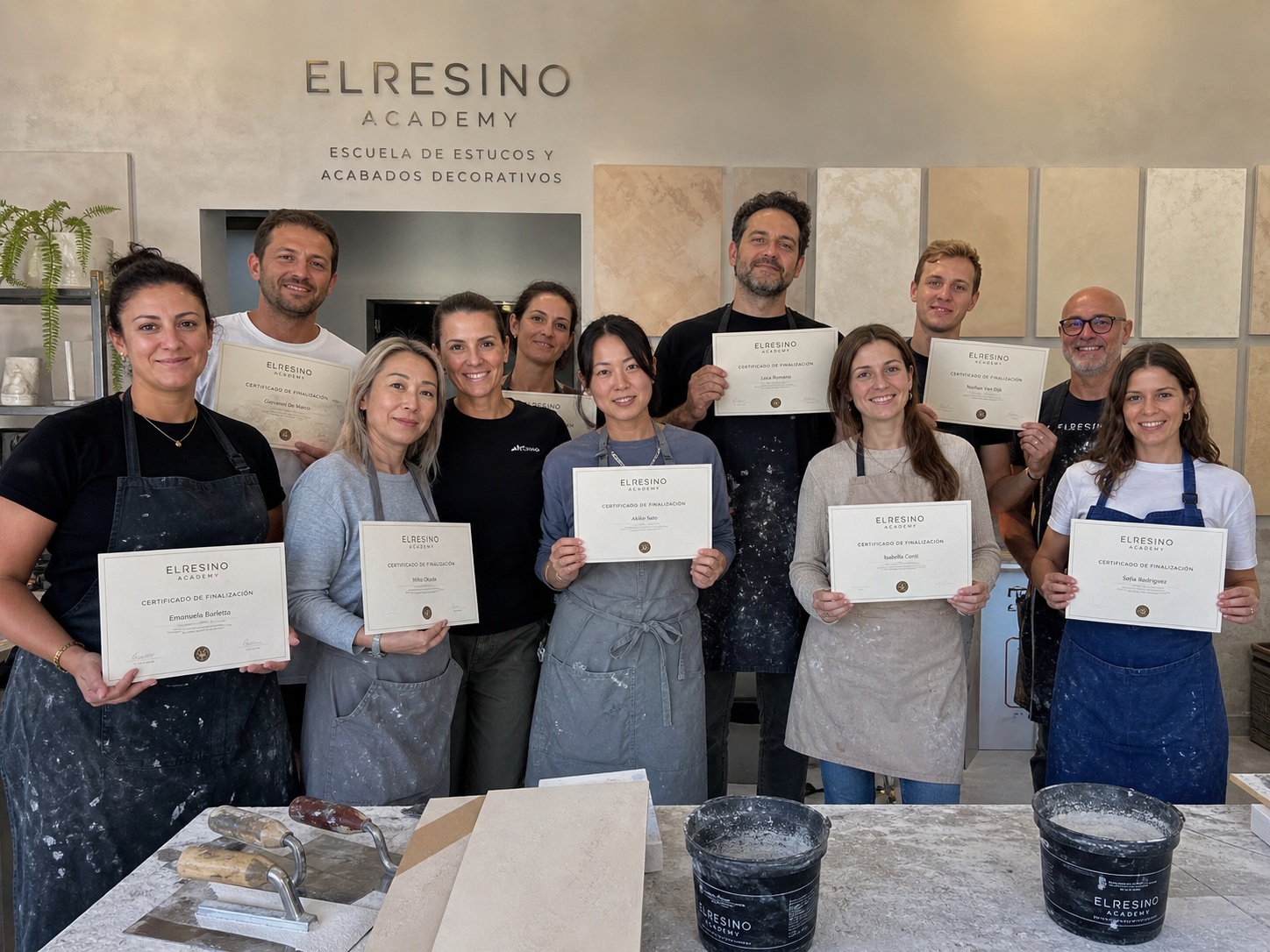
Students who complete training with ELRESINO® Academy
receive a certificate of completion.
While a certificate alone does not make someone an expert
overnight, it can help students show that they have invested in practical
training and taken the first step towards developing a professional skill.
For anyone starting out, this can be useful when building a
portfolio, speaking to clients or promoting new services online.
The real value, however, appears to be the confidence gained
from working directly with the materials and understanding the process from
preparation to final finish.
Support Beyond the Training Room
Another point worth noting is the academy’s focus on support
after the course.
For many students, the challenge is not only learning the
finish. It is knowing what to do afterwards.
What tools should they buy?
How should they practise?
How should they show their work online?
How do they speak to clients?
How do they turn the skill into paid work?
ELRESINO® Academy appears to recognise this and offers
guidance that goes beyond the practical application itself. For students hoping
to turn decorative finishes into a business opportunity, that kind of support
can make a real difference.
Why This Type of Training Matters Now
The interiors market is changing. Clients want more
personal, more crafted and more visually interesting spaces.
A plain painted wall may be suitable for some projects, but
in premium interiors, the demand is increasingly for finishes with texture,
movement and individuality.
This is why Venetian plaster, stucco, polished plaster and
microcement are becoming more relevant. They offer designers, homeowners and
businesses a way to create surfaces that feel bespoke.
As this demand grows, skilled applicators will become more
valuable.
Training providers such as ELRESINO® Academy are helping to
bridge the gap between demand and skill. They give people a way to enter the
market, develop technique and understand how decorative finishes work in real
interior environments.
Final Thoughts
Looking at ELRESINO® Academy from the outside, it appears to
offer a practical and commercially relevant route into the world of Venetian
plaster, stucco, polished plaster and microcement.
The academy’s location in Antequera, Málaga, its connection
to real decorative finishing work and its focus on hands-on training make it an
attractive option for beginners, tradespeople and professionals who want to
develop specialist skills.
For anyone interested in learning decorative finishes in
Spain, ELRESINO® Academy is certainly worth considering.
Whether the goal is to start a new career, expand an
existing trade, build a decorative finishes business or simply learn a
high-value craft, these courses offer a strong introduction to a growing area
of interior design and renovation.
For more information about Venetian plaster and stucco
training courses in Spain, visit ELRESINO® Academy in Antequera, Málaga, or
contact the team to ask about upcoming course dates and availability.
Key Benefits
- One to one Training
- Small Group Training